Category Archives: General

Toledo water treatment innovations and clarification technologies

Toledo, a city situated along the shores of Lake Erie, provides a fascinating case study for innovations in water treatment and clarification technologies. As with any municipality that relies heavily on a single water source, Toledo faces unique challenges and opportunities in ensuring the cleanliness, safety, and sustainability of its water supply.

The Challenge of Algal Blooms

Lake Erie is notoriously plagued by harmful algal blooms (HABs), which can release toxins harmful to humans and wildlife. These problems, which have been escalating since the early 2000s, reached critical mass in 2014 when a HAB resulted in a three-day water crisis that left half a million Toledoans without safe drinking water. This alarming event spurred the city, industry experts, and academic researchers into action, leading to a proliferation of water treatment and clarification innovations.

Bold Strides in Pre-Treatment Processes

One of the significant areas of innovation has been in pre-treatment processes, particularly in early detection and management of algal toxins. Through a partnership with the Case Western environmental engineering team, Toledo has developed a sophisticated monitoring system. Using real-time sensors placed strategically throughout the local watershed, this system tracks key indicators of HABs, providing an early warning system that can trigger adaptive responses at the treatment plants.

This collaboration with Case Western environmental engineering is a prime example of academia and industry coming together to develop technological innovations that address real-world problems. With this data-informed approach, harmful toxins can be nipped in the bud before they reach treatment facilities.

Advancements in Clarification Strategies

In addition to these pre-treatment enhancements, Toledo has also made considerable advancements in clarification strategies, which involve the removal of particles, organic matter, and other impurities from water. Traditionally, this process relies heavily on coagulation and flocculation, followed by sedimentation and filtration.

Toledo water treatment plants, however, have begun to incorporate ballasted flocculation into their process. This technology uses a sand or microsand additive to expedite the settling of particles during flocculation, thereby increasing clarity and reducing the time involved in traditional sedimentation processes.

Exploring the Potential of Microfiltration and Nanofiltration Technologies

Following clarification, the treatment process usually involves disinfection—typically through the use of chlorine. While this technique is effective in killing off most bacterial and viral pathogens, it does not remove some toxins. Moreover, excessive use of chlorine can lead to the formation of disinfection byproducts (DBPs) that pose their own health risks.

Given these challenges, Toledo has been actively exploring and piloting the use of microfiltration and nanofiltration technologies. These involve passing the water through ultrafine membranes that can filter out a broad spectrum of contaminants, including toxins, viruses, and many forms of organic matter. Not only do these technologies provide an additional level of protection against harmful substances, but they also reduce the reliance on chemical disinfectants and the risks associated with DBPs.

The Role of Advanced Water Treatment Control Systems

The complexity of the new technologies being implemented and the variability of input water qualities—especially in response to weather events or algal blooms—calls for advanced, agile control systems. These technologies account for real-time water quality data, environmental parameters, and other relevant factors to ensure optimal performance.

Toledo has embraced cutting-edge control systems that incorporate machine learning and artificial intelligence to optimize the performance of its treatment processes. By analyzing real-time data, these systems can automatically adjust various treatment parameters, ensuring the treated water consistently meets or surpasses health and quality standards.

Forward-Thinking: The Future of Water Treatment in Toledo

The city’s current and future plans involve not just managing the present water quality issues but also proactively addressing future challenges. For instance, climate change is predicted to exacerbate many water quality problems, including the frequency and severity of HABs. Anticipating this, Toledo engineers and city planners are collaborating to develop resilient water treatment systems.

As part of this forward-thinking approach, Toledo has convened a panel of global experts on algal toxins through its Harmful Algal Bloom (HAB) Summit. The goal? To harness collective wisdom in designing advanced, scalable, and economically sustainable water treatment solutions that can be adapted to changing and variable conditions.

The water treatment and clarification technology innovations that Toledo has initiated and continues to cultivate are not just about ensuring clean and safe water for its residents. They also aim to create sustainable water management practices that can be emulated by other cities facing similar issues. Only time can tell what new advancements will emerge, but Toledo’s approach to adaptive, data-informed, and future-oriented water treatment speaks volumes about its commitment to water safety and sustainability. What question does this prompt, then? Perhaps, what innovative water treatment solutions will Toledo pioneers next?


Ohio wastewater treatment plant locations and infrastructure mapping

Being home to more than 11 million citizens, Ohio, famed as the Buckeye State, takes on an enormous effort to manage its wastewater effectively. This largely revolves around an extensive network of wastewater treatment plants (WWTPs) scattered across the state. But do we ever think about their locations or how the infrastructure is maintained and upgraded? Let’s shed light on Ohio’s wastewater treatment plant infrastructure, from their strategic locations to infrastructure mapping.

Ohio’s Wastewater Treatment Landscape: Geographic Widespread

Ohio’s urban and rural landscapes alike teem with a vast array of wastewater treatment facilities, each playing a critical role in managing and treating millions of gallons of wastewater daily. According to data from the United States Environmental Protection Agency (EPA), Ohio houses around 1,080 municipal wastewater treatment plants, serving an estimated population of 10.7 million.

Wondering about their distribution? The geographical locations of these facilities are typically determined by population density, local topography, and the catchment area they serve. For instance, densely populated areas like Cleveland and Cincinnati are bristling with multiple wastewater treatment plants, while sparsely populated regions may be served by a single, central facility.

Indeed, the practicality of a plant’s location is vital. A case in point is the Southerly Wastewater Treatment Plant, one of the largest in Ohio. Nestled on a 400-acre site in the Cuyahoga River Valley, it expeditiously processes an average of 125 million gallons of wastewater daily for over 601,000 residents within multiple municipalities in the Greater Cleveland area.

Infrastructure Mapping: A Cornerstone for Effective Wastewater Management

Mapping the infrastructure of Ohio’s wastewater treatment plants isn’t just an academic exercise; it’s a cornerstone for effective wastewater management. Why so? Infrastructure mapping provides a crucial visual representation of assets and resources, necessary for strategic planning, asset management, process optimization, and future expansions.

One resource that’s been instrumental in the task of mapping and documenting the state’s wastewater treatment facilities is Ohio wastewater treatment plants. This interactive map provides a detailed overview of the state’s WWTPs, from plant-specific specs and treatment capacities to service areas and associated regulatory standards. Such comprehensive data insights are central to informed decision-making, performance tracking, and strategic planning.

The Role of Geographic Information Systems (GIS)

And where does Geographic Information Systems (GIS) come in? GIS tools provide technologically advanced means to visualize, understand, and interpret data linked to Ohio’s wastewater treatment locations and infrastructures. Assets can be dynamically mapped in real-time, enabling plant operators to track, manage, and optimize processes.

GIS not only highlights the actual physical location of plants but also maps out infrastructure elements like sewer lines, valves, lift stations, and outfall locations. This dynamic visualization helps track operational changes, optimize logistics, schedule maintenance effectively, and identify areas for system enhancements.

The Future of Ohio’s Wastewater Treatment: Modernization and Upgrades

Given the significance of wastewater treatment in maintaining public health and environmental quality, Ohio continually seeks innovative methods to modernize and upgrade its existing wastewater treatment infrastructure.

From optimizing energy usage to deploying advanced treatment technologies like membrane bioreactors, the state’s treatment facilities are constantly evolving. We’ve also seen an increased adoption of smart technology and IoT-based systems that facilitate efficient data collection and decision-making, improving the efficacy of wastewater management.

An excellent example of this modernization is the Akron Water Reclamation Facility (WRF). It recently underwent a $1.2 billion upgrade, employing state-of-the-art technology to improve nutrient removal, reduce overflows, and enhance the facility’s overall sustainability.

In Conclusion

Managing and treating wastewater is a colossal undertaking, particularly for a state as populous as Ohio. The efficient operation of Ohio’s wastewater treatment plants, their strategic placement, and rigorous infrastructure mapping ensure that these facilities continue to serve the state’s residents effectively, today and well into the future.

Surely, while a large part of their work goes unseen and often unappreciated, it’s the seamless functioning of these facilities that afford us the comfort of turning on a tap or flushing a toilet without a second thought – a testament to Ohio’s commitment to sustainable water management.

Sedimentation causes impacts and prevention strategies

Sedimentation, raised from the depths of our natural water bodies, is a worldwide phenomenon that might not grab immediate attention, yet bears considerable impacts on both our environment and infrastructure. Consistently neglected, unregulated sedimentation can lead to severe ecological and structural consequences, ranging from reduced water quality to infrastructure damage.

Unpacking Sedimentation: The Causes

Broadly defining, sedimentation denotes the deposition of suspended particles from a fluid, like water or air, onto the bed surface of water bodies. Sediments essentially comprise soil and mineral particles, elemental organic matter, and microscopic organisms. But how do these particles end up suspending within water bodies in the first place?

The primary culprits are weathering and erosion. Weathering involves breaking down rock formations into smaller particles through natural processes, such as temperature fluctuation, wind, water, and chemical reactions. Erosion, then, transports these particles to other locations, predominantly to wetlands, rivers, and oceans. The rate of sedimentation often escalates due to human activities such as deforestation, farming, construction, and mining.

While natural erosion and weathering are inevitable and form part of Earth’s natural lifecycle, human-related soil erosion is often preventable and can result in sedimentation rates that significantly exceed those from natural causes. According to The Global Assessment of Soil Degradation (GLASOD), it is estimated that human-induced soil erosion exceeds natural soil formation by about 23 billion tonnes per year.

Sizing Up the Consequences

The repercussions of unregulated sedimentation are expansive and multifaceted. Let’s dissect them into environmental and infrastructural impacts for better understanding.

Environmental Impacts

Sedimentation can drastically affect aquatic ecosystems, more specifically, diminishing water quality. Resuspended sediments increase water turbidity, reducing light penetration and inhibiting photosynthesis of aquatic plants— the pillar of aquatic food webs.

When dealing with sedimentation in water treatment, excess sediment can harbor harmful pollutants, such as heavy metals, pesticides, and fertilizers, posing substantial risks to both aquatic life and humans consuming this water.

Furthermore, sediment deposits can alter water flow, leading to habitat loss or relocation. For instance, spawning habitats for specific fish species may be destroyed when sediment fills in spaces between bottom-dwelling organisms.

Infrastructural Impacts

Sediment accumulation affects not only natural ecosystems but also man-made infrastructures. Dams, harbors, and irrigation structures confront sediment buildup, which hampers their functionality and longevity. It can also result in increased costs due to regular dredging or repair requirements.

Elevated sediment flows can contribute to the silting up of waterways and reservoirs, leading to a loss in storage capacity. For instance, an International Commission On Large Dams (ICOLD) study revealed that about 0.5-1% of the world’s total reservoir volume is lost annually due to siltation.

Tackling Sedimentation: Prevention Strategies

How then can we mitigate the effects of sedimentation? The answer lies in devising efficient sediment management strategies that strike a balance between human development and sustaining ecological processes.

Habitat restoration and rehabilitation can help. One example of this involves reintroducing native plant species that will help anchor the soil and minimize erosion.

Preserving riparian zones, areas of land adjacent to rivers and streams, is also immensely beneficial as they serve as natural sediment filters.

On the infrastructure front, implementing sediment traps and basins in critical runoff areas, and regular maintenance and dredging of affected structures can alleviate sediment build-up.

Land use policies can play a significant role in sediment control. Reducing deforestation and promoting sustainable farming practices, such as terrace cropping and contour plowing, can considerably diminish soil erosion and ensuing sedimentation.

The Bigger Picture

It’s become increasingly crucial to prioritize sustainable sediment management measures amidst growing environmental and infrastructural pressure. A coordinated approach, coupling stringent land policies, technical measures, and active public participation, is the need of the hour.

With sedimentation posing such substantial challenges, it’s evident we’re not just dealing with grains of sand. Moving forward, recognizing the gravity and scale of this issue might be the key to not just preserving our water bodies but ensuring the overall well-being of our environment and ecosystems. The onus is on us to address this pressing concern with the zeal and concern it rightly warrants. After all, every little grain matters, doesn’t it?

Cincinnati sedimentation basin design and water quality standards

In tackling issues concerning water quality and purification techniques, the spotlight rarely falls on the seemingly invisible but critical infrastructure involved. Among these often overlooked systems are sedimentation basins, prominent features in the water treatment process. This piece will focus on sedimentation basin design, emphasizing Cincinnati’s approach and related water quality standards, while sprinkling in a few engrossing technical details.

What are Sedimentation Basins?

Sedimentation basins, also known as sedimentation tanks or settling basins, play an essential role in the water treatment process. These basins provide a calm environment where gravity can do its job, allowing heavier particles, or sediments to settle at the bottom. The remaining water at the top then proceeds to the next phase of treatment.

Without these basins, a significant amount of particulate matter could make water treatment much more challenging. Worse, it might even compromise the final water quality. Consequently, a well-designed sedimentation basin is a decisive part of water management strategy.

How Cincinnati Designs Sedimentation Basins – An Advanced Approach

What sets Cincinnati apart in the design of their sedimentation basins? First, the designers appreciated how the peculiar shape of a sedimentation basin could affect its function. They found that square or rectangular basins may not provide the most effective solution, leading to scouring, short-circuiting, or dead zones that can disrupt the settling process.

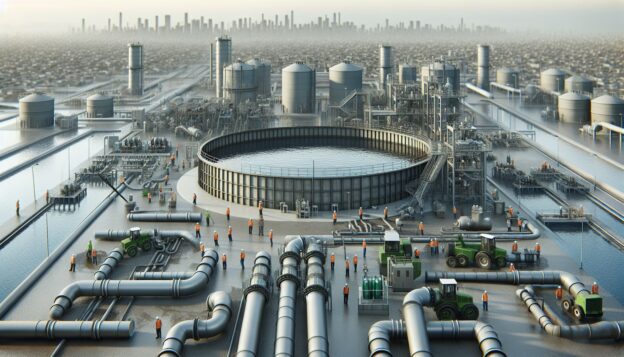
Subsequently, Cincinnati’s water treatment plants, such as the Miller Treatment Plant and Bolton Treatment Plant began adopting circular sedimentation basins. In these circular designs, inflow is from the center, spreading outward evenly, promoting consistent and effective sedimentation. Remember, achieving an even flow distribution aids the settling process, reducing the possibility of sediment re-suspension and increasing the overall water treatment efficiency.

Additionally, the finished water collection system in Cincinnati involves spiral flow launders. These structures, which look like spiraling channels around the perimeter, prevent disturbance of settled sediment when extracting the clear water.

Water Quality Standards: Meeting and Exceeding Expectations

The Ohio EPA surface water division is primarily responsible for defining and enforcing water quality standards in Cincinnati. That entails executing both the federal Clean Water Act and similar state regulations. In essence, it sets the regulatory benchmarks for water quality and oversees treatment plants’ compliance.

In setting this bar, the Ohio EPA surface water division aims to uphold both public health and environmental integrity. But, Cincinnati’s sedimentation basins not only meets these standards but often exceed them.

For example, a vital measure of sedimentation basin performance is turbidity removal. Turbidity refers to the cloudiness of water, indicating the presence of suspended particles. The Ohio EPA outlines a maximum turbidity of 1 NTU (Nephelometric Turbidity Units) in treated water. Still, the Miller and Bolton treatment plants, utilizing the advanced sedimentation design, frequently report effluent turbidity levels far below this standard.

Furthermore, the treatment plants are not content with only scientific measurements. To ensure public awareness and confidence, Cincinnati’s water authority provides an annual consumer confidence report. This document, transparent and accessible, outlines the water quality metrics and how they align with both state and federal requirements.

Improving Efficiency and Future Trends

To enhance sedimentation efficiency, Cincinnati’s water treatment practitioners are eyeing the opportunity to incorporate sedimentation aids, such as flocculants, into basin design. These chemicals promote particle agglomeration, making the particles larger and more likely to settle.

Moreover, future design considerations may include the use of computational fluid dynamics (CFD) software. One might wonder, why a software tool for designing basins? This technology, already impacting various industries, can simulate fluid flow within a model of a sedimentation basin. Practitioners can then modify the design based on these simulations, optimizing both sedimentation effectiveness and hydraulic performance.

Concluding Remarks

In summary, the science and art behind Cincinnati’s sedimentation basin design have significant implications for its water quality standards. The city’s innovative move towards circular sedimentation basins demonstrates a forward-thinking approach to water treatment. An approach that not only satisfies the standards set forth by the Ohio EPA, but often surpasses them.

In the future, we can anticipate continued optimization of these systems. Whether through software simulations or the integration of chemical aids, Cincinnati seems committed to maintaining its status as a leader in water treatment strategies.

However, remember this achievement is not only about the city or the industry but fundamentally about people, their health, and their environment. Finally, isn’t that what all good water management should be about?

Cleveland wastewater management and settling tank operations

Wastewater management is a complex task, particularly in a city the size of Cleveland, Ohio. Serving nearly half a million residents and handling more than 90 billion gallons of wastewater annually, the Cleveland Division of Water Pollution Control (WPC) forms an instrumental part of the city’s infrastructure. Settling tanks play a crucial role in the management and treatment of this wastewater. In this article, we explore how Cleveland manages its wastewater, looking in particular at the operation of these settling tanks.

Wastewater Treatment in Cleveland

In Cleveland, the herculean task of wastewater treatment begins at the source – homes, businesses, and industries. Once the wastewater enters the sewer system, it’s transported through Cleveland’s intricate sewer system, which spans over 300 miles, to the three major wastewater treatment plants operated by the WPC.

The principle here is simple. We need to protect Lake Erie’s waters from being polluted by untreated wastewater because it serves as the primary source of drinking water for the city’s residents. The wastewater is subjected to a series of treatment processes to remove solids, organic matter, and harmful bacteria. This commitment to water quality is why the WPC invests heavily in maintenance and upgrades.

Settling Tanks: The Unsung Heroes of Wastewater Treatment

One essential part of the treatment process is the settling tanks, also known as sedimentation tanks. Settling tanks mainly function to separate solids that settle by gravity and lighter substances that float on the water surface.

The wastewater first enters the settling tanks after being screened and detrited to remove large solids and grit. In these tanks, the water is held for a sufficient time, allowing settleable solids to sink to the bottom and lighter materials like oil and grease to float to the surface.

Those studying at Ohio University civil engineering learn that these two layers are then separately removed and further treated, while the partially clarified water is sent on for secondary treatment. Maintaining these settling tanks involves regular removal of settled sludge and scum, which then undergo further treatment. Careful monitoring ensures that the sedimentation process works efficiently throughout.

The Significance of Sedimentation and Settling Tank Operations

Why is this sedimentation process, and the role of the settling tanks, so vital? Primarily, it’s about improving water quality and the efficiency of downstream treatment processes.

Removing solids reduces organic material in the water, which in turn reduces the biological oxygen demand – a critical measure of water quality. Fewer solids also result in less wear and tear on treatment equipment and a decrease in subsequent treatment steps’ complexity, saving both time and operational costs.

Furthermore, the solids removed from the settling tanks can be treated and converted into biosolids. These biosolids serve a host of useful purposes, such as soil amendments for agricultural lands and reclamation sites for new developments.

The Future of Wastewater Management in Cleveland

While Cleveland’s wastewater management has reliably served its residents for decades, continual advances in technology and treatment techniques promise further improvements. Considerations for the future encompass a range of factors from an increasing focus in minimizing discharge impact on Lake Erie to the potential for energy recovery from wastewater treatment operations.

For instance, using advanced-Nutrient removal technology reduces the levels of nitrogen and phosphorus discharged into the lake, mitigating harmful algal blooms. On the energy front, advances such as anaerobic digestion technologies present potent opportunities to convert wastes into energy, providing an exciting dimension to wastewater treatment.

Managing Wastewater in a Rapidly Changing World

As Cleveland and its wastewater infrastructure navigate a rapidly changing world, what doesn’t change is the unending commitment to water quality and environmental care. An essential part of this process is effective settling tank operations – unsung heroes striving to protect the environment and improve quality of life.

From the source, through miles of sewer lines, in and out of settling tanks and treatment plants, every gallon of Cleveland’s wastewater continues its journey carefully managed and meticulously treated. An epitome of engineering and environmental stewardship, this process reflects how, with mature systems and continual innovation, we can protect our most precious resource—water.