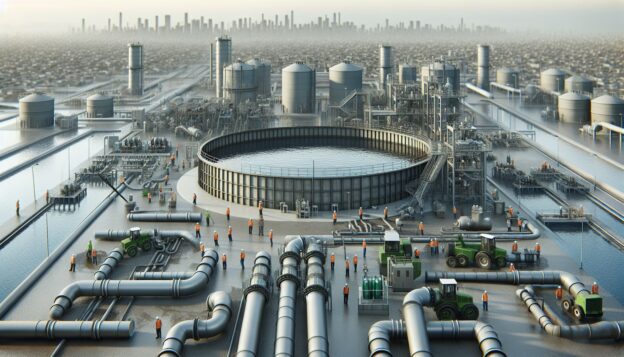
Wastewater management is a complex task, particularly in a city the size of Cleveland, Ohio. Serving nearly half a million residents and handling more than 90 billion gallons of wastewater annually, the Cleveland Division of Water Pollution Control (WPC) forms an instrumental part of the city’s infrastructure. Settling tanks play a crucial role in the management and treatment of this wastewater. In this article, we explore how Cleveland manages its wastewater, looking in particular at the operation of these settling tanks.
Wastewater Treatment in Cleveland
In Cleveland, the herculean task of wastewater treatment begins at the source – homes, businesses, and industries. Once the wastewater enters the sewer system, it’s transported through Cleveland’s intricate sewer system, which spans over 300 miles, to the three major wastewater treatment plants operated by the WPC.
The principle here is simple. We need to protect Lake Erie’s waters from being polluted by untreated wastewater because it serves as the primary source of drinking water for the city’s residents. The wastewater is subjected to a series of treatment processes to remove solids, organic matter, and harmful bacteria. This commitment to water quality is why the WPC invests heavily in maintenance and upgrades.
Settling Tanks: The Unsung Heroes of Wastewater Treatment
One essential part of the treatment process is the settling tanks, also known as sedimentation tanks. Settling tanks mainly function to separate solids that settle by gravity and lighter substances that float on the water surface.
The wastewater first enters the settling tanks after being screened and detrited to remove large solids and grit. In these tanks, the water is held for a sufficient time, allowing settleable solids to sink to the bottom and lighter materials like oil and grease to float to the surface.
Those studying at Ohio University civil engineering learn that these two layers are then separately removed and further treated, while the partially clarified water is sent on for secondary treatment. Maintaining these settling tanks involves regular removal of settled sludge and scum, which then undergo further treatment. Careful monitoring ensures that the sedimentation process works efficiently throughout.
The Significance of Sedimentation and Settling Tank Operations
Why is this sedimentation process, and the role of the settling tanks, so vital? Primarily, it’s about improving water quality and the efficiency of downstream treatment processes.
Removing solids reduces organic material in the water, which in turn reduces the biological oxygen demand – a critical measure of water quality. Fewer solids also result in less wear and tear on treatment equipment and a decrease in subsequent treatment steps’ complexity, saving both time and operational costs.
Furthermore, the solids removed from the settling tanks can be treated and converted into biosolids. These biosolids serve a host of useful purposes, such as soil amendments for agricultural lands and reclamation sites for new developments.
The Future of Wastewater Management in Cleveland
While Cleveland’s wastewater management has reliably served its residents for decades, continual advances in technology and treatment techniques promise further improvements. Considerations for the future encompass a range of factors from an increasing focus in minimizing discharge impact on Lake Erie to the potential for energy recovery from wastewater treatment operations.
For instance, using advanced-Nutrient removal technology reduces the levels of nitrogen and phosphorus discharged into the lake, mitigating harmful algal blooms. On the energy front, advances such as anaerobic digestion technologies present potent opportunities to convert wastes into energy, providing an exciting dimension to wastewater treatment.
Managing Wastewater in a Rapidly Changing World
As Cleveland and its wastewater infrastructure navigate a rapidly changing world, what doesn’t change is the unending commitment to water quality and environmental care. An essential part of this process is effective settling tank operations – unsung heroes striving to protect the environment and improve quality of life.
From the source, through miles of sewer lines, in and out of settling tanks and treatment plants, every gallon of Cleveland’s wastewater continues its journey carefully managed and meticulously treated. An epitome of engineering and environmental stewardship, this process reflects how, with mature systems and continual innovation, we can protect our most precious resource—water.