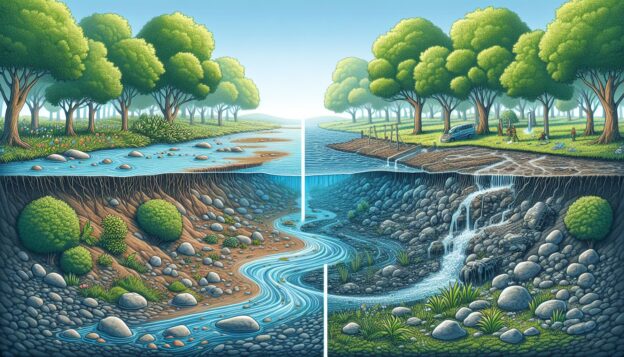
Sedimentation, raised from the depths of our natural water bodies, is a worldwide phenomenon that might not grab immediate attention, yet bears considerable impacts on both our environment and infrastructure. Consistently neglected, unregulated sedimentation can lead to severe ecological and structural consequences, ranging from reduced water quality to infrastructure damage.
Unpacking Sedimentation: The Causes
Broadly defining, sedimentation denotes the deposition of suspended particles from a fluid, like water or air, onto the bed surface of water bodies. Sediments essentially comprise soil and mineral particles, elemental organic matter, and microscopic organisms. But how do these particles end up suspending within water bodies in the first place?
The primary culprits are weathering and erosion. Weathering involves breaking down rock formations into smaller particles through natural processes, such as temperature fluctuation, wind, water, and chemical reactions. Erosion, then, transports these particles to other locations, predominantly to wetlands, rivers, and oceans. The rate of sedimentation often escalates due to human activities such as deforestation, farming, construction, and mining.
While natural erosion and weathering are inevitable and form part of Earth’s natural lifecycle, human-related soil erosion is often preventable and can result in sedimentation rates that significantly exceed those from natural causes. According to The Global Assessment of Soil Degradation (GLASOD), it is estimated that human-induced soil erosion exceeds natural soil formation by about 23 billion tonnes per year.
Sizing Up the Consequences
The repercussions of unregulated sedimentation are expansive and multifaceted. Let’s dissect them into environmental and infrastructural impacts for better understanding.
Environmental Impacts
Sedimentation can drastically affect aquatic ecosystems, more specifically, diminishing water quality. Resuspended sediments increase water turbidity, reducing light penetration and inhibiting photosynthesis of aquatic plants— the pillar of aquatic food webs.
When dealing with sedimentation in water treatment, excess sediment can harbor harmful pollutants, such as heavy metals, pesticides, and fertilizers, posing substantial risks to both aquatic life and humans consuming this water.
Furthermore, sediment deposits can alter water flow, leading to habitat loss or relocation. For instance, spawning habitats for specific fish species may be destroyed when sediment fills in spaces between bottom-dwelling organisms.
Infrastructural Impacts
Sediment accumulation affects not only natural ecosystems but also man-made infrastructures. Dams, harbors, and irrigation structures confront sediment buildup, which hampers their functionality and longevity. It can also result in increased costs due to regular dredging or repair requirements.
Elevated sediment flows can contribute to the silting up of waterways and reservoirs, leading to a loss in storage capacity. For instance, an International Commission On Large Dams (ICOLD) study revealed that about 0.5-1% of the world’s total reservoir volume is lost annually due to siltation.
Tackling Sedimentation: Prevention Strategies
How then can we mitigate the effects of sedimentation? The answer lies in devising efficient sediment management strategies that strike a balance between human development and sustaining ecological processes.
Habitat restoration and rehabilitation can help. One example of this involves reintroducing native plant species that will help anchor the soil and minimize erosion.
Preserving riparian zones, areas of land adjacent to rivers and streams, is also immensely beneficial as they serve as natural sediment filters.
On the infrastructure front, implementing sediment traps and basins in critical runoff areas, and regular maintenance and dredging of affected structures can alleviate sediment build-up.
Land use policies can play a significant role in sediment control. Reducing deforestation and promoting sustainable farming practices, such as terrace cropping and contour plowing, can considerably diminish soil erosion and ensuing sedimentation.
The Bigger Picture
It’s become increasingly crucial to prioritize sustainable sediment management measures amidst growing environmental and infrastructural pressure. A coordinated approach, coupling stringent land policies, technical measures, and active public participation, is the need of the hour.
With sedimentation posing such substantial challenges, it’s evident we’re not just dealing with grains of sand. Moving forward, recognizing the gravity and scale of this issue might be the key to not just preserving our water bodies but ensuring the overall well-being of our environment and ecosystems. The onus is on us to address this pressing concern with the zeal and concern it rightly warrants. After all, every little grain matters, doesn’t it?